1.Why Does Sublimation Temperature and Time Matter?
Have you ever wondered:
- Why does my sublimation print look yellow or burnt?
- Why are my colors dull and faded?
- Is my temperature too high or too low?
- How long should I sublimate my project?
- Why do the same settings work for one blank but not another?
If you've asked any of these questions, you're not alone.
One of the biggest challenges for beginners—and even experienced makers—is finding the right balance between sublimation temperature and time.
Too much heat can damage colors.
Too little heat can prevent the image from transferring completely.
Understanding how temperature and time work together is the key to achieving vibrant, professional-quality sublimation results.
In this guide, you'll learn why sublimation temperature matters, how to troubleshoot common transfer issues, and how to adjust your settings for different projects.
2.Why Is Sublimation Temperature So Important?
Sublimation depends on heat.
When the temperature is right, the dye turns into gas and bonds with the polyester or coated surface. If the heat is off, the transfer can fail.
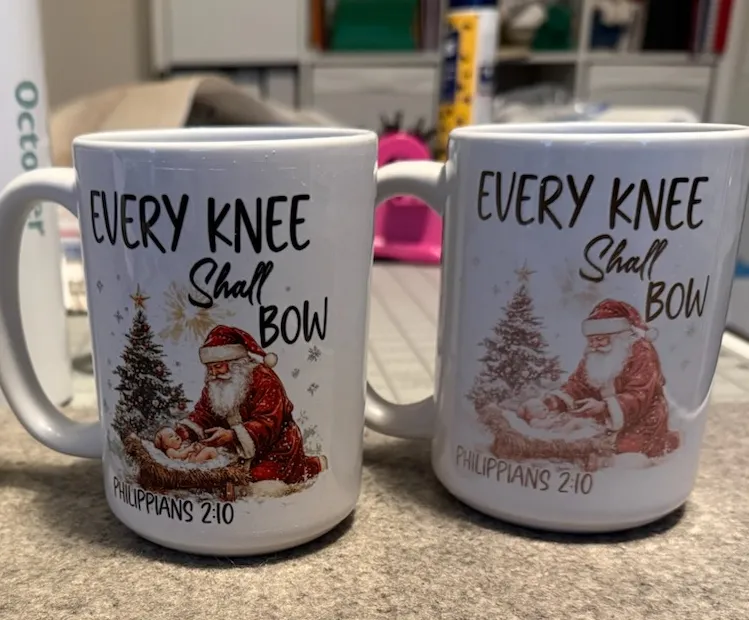
What if the temperature is too low?
The dye may not fully activate, which can cause:
❌ Faded colors
❌ Weak blacks
❌ Missing details
❌ Incomplete transfers
What if the temperature is too high?
Too much heat can damage the print or coating, leading to:
❌ Yellowing or browning
❌ Burn marks
❌ Color shifts
❌ Blurry details
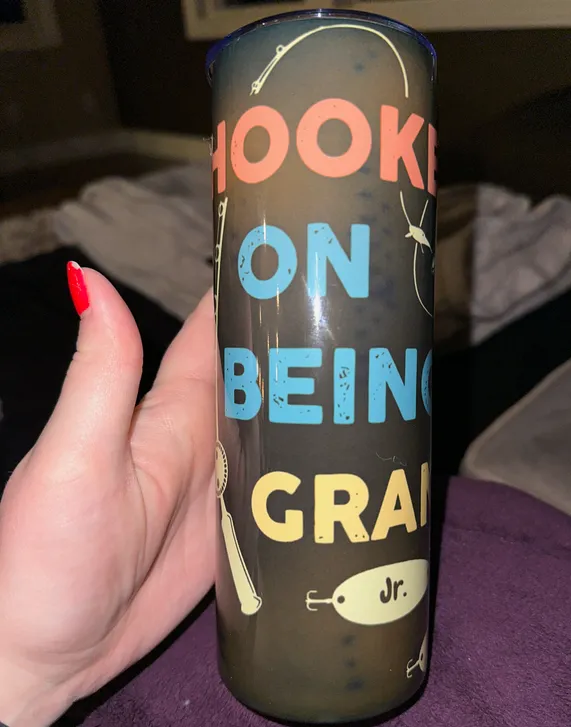
In short, low heat causes weak transfers, and high heat causes damage. Finding the right temperature is key to getting bright, clean sublimation results.
3.How Do Time and Temperature Work Together?
Many beginners focus only on temperature.
However, time is equally important.
Think of temperature and time as partners.
If one is incorrect, the transfer may fail.
Can Higher Temperature Reduce Pressing Time?
Sometimes.
However, increasing temperature too much may cause:
- Yellowing
- Over-sublimation
- Coating damage
Can Longer Time Compensate for Lower Temperature?
To a certain extent.
But if the temperature is too low, extending the time may still fail to achieve a complete transfer.
The goal is balance.
Professional sublimation is about finding the optimal combination of heat and time—not simply increasing one or the other.
3.1.Why Is My Sublimation Print Yellow?
Yellow sublimation prints usually mean too much heat.
Common Causes
❌️Is the Temperature Too High?
High heat can burn the coating and change colors.
❌️Is the Heating Time Too Long?
Too much time can cause yellowing even at the correct temperature.
Quick Fixes
Try:
✅ Lowering the temperature by 5–10°F
✅ Shortening the press time
✅ Checking the actual temperature with an infrared thermometer
Small changes often fix yellow sublimation prints.
3.2.Why Is My Sublimation Color Faded?
Faded sublimation colors usually mean not enough heat.
Common Causes
❌️Is the Temperature Too Low?
The dye may not fully transfer.
❌️Is the Heating Time Too Short?
The image may stop transferring before it finishes.
❌️Is the Pressure Uneven?
Poor contact can reduce transfer quality.
❌️Is the Blank Sublimation Ready?
Not all blanks work with sublimation.
Quick Fixes
Try:
✅ Raising the temperature slightly
✅ Increasing the press time
✅ Improving paper contact
✅ Using quality sublimation blanks
4.How Can You Tell If the Temperature Is Too High?
Ask yourself:
Do You See Yellow or Brown Areas?
This is often the first warning sign.
Are Fine Details Becoming Blurry?
Excessive heat can cause dyes to spread beyond intended boundaries.
Have Colors Shifted Unexpectedly?
Overheating may alter color balance.
Does the Coating Look Damaged?
Burnt coatings often appear dull or uneven.
If you notice these symptoms, reduce temperature or transfer time before running additional products.
5.How Can You Tell If the Temperature Is Too Low?
Signs of underheating include:
Are Blacks Appearing Gray?
Black ink often reveals temperature issues first.
Do Colors Look Weak?
Low temperatures prevent full dye penetration.
Are Some Areas Missing Color?
Incomplete transfers commonly result from insufficient heat.
Does the Design Look Washed Out?
This often indicates the dye never fully activated.
When in doubt, increase settings gradually and test again.
6.What Is the Best Way to Find the Right Sublimation Settings?
Many makers search for a universal sublimation chart.
The reality is:
Does Every Blank Use the Same Settings?
No.
Different products have different:
- Coatings
- Materials
- Thicknesses
- Heat retention characteristics
A ceramic mug behaves differently than a phone case.
A tumbler heats differently than a polyester shirt.
That's why testing remains essential.
7.Tips for Achieving Better Sublimation Results
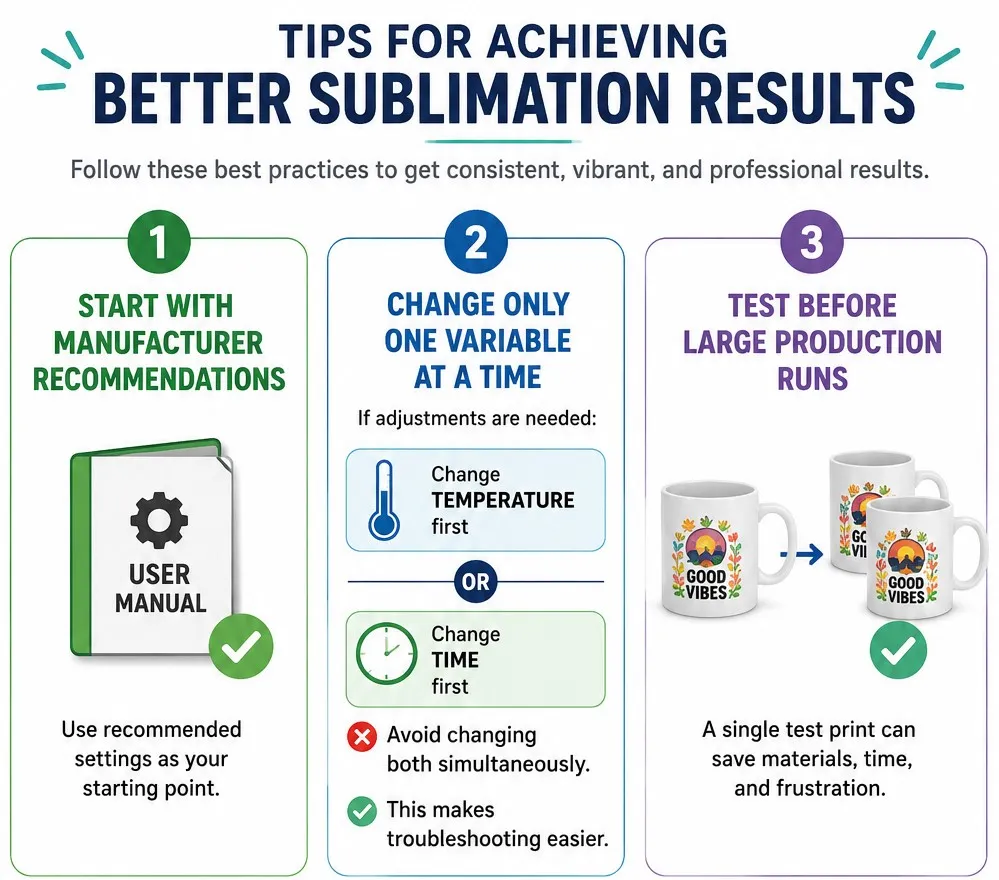
Start With Manufacturer Recommendations
Use recommended settings as your starting point.
Change Only One Variable at a Time
If adjustments are needed:
- Change temperature first
- Or change time first
Avoid changing both simultaneously.
This makes troubleshooting easier.
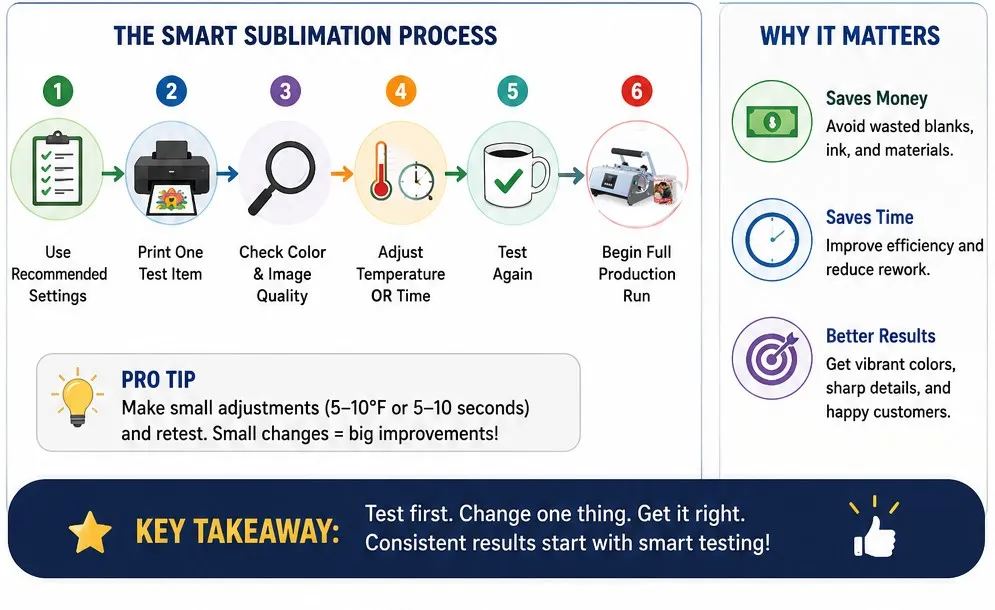
Test Before Large Production Runs
A single test print can save materials, time, and frustration.
8.Final Thoughts
Successful sublimation isn't about using the highest temperature or the longest transfer time. It's about finding the right balance.
By understanding how heat and time affect sublimation, you'll spend less time troubleshooting and more time creating vibrant, professional-quality products that customers love.